No poster
2011 · ★ 5.0 (1)
A feature length documentary about the rise and fall of the world's smallest independent nation; Nauru.
JustWatch
·
Local
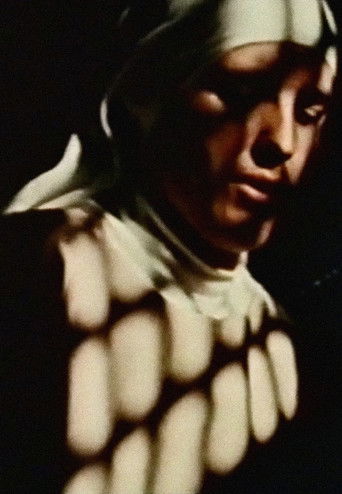
1970 · ★ 0.0 (0)
Filmed at Mission San Francisco de Guayo on the Orinoco River Delta in Venezuela, in 1965. A Franciscan nun and an Indian woman describe the Indian way of life before and after the arrival of the mission 20 years prior to the making of the film; their words are translated to English voice-over. They discuss marriage ceremonies, fishing, gender roles in work distribution and family responsibilities, shamanism and death rituals. Preserved by the Academy Film Archive in partnership with National Film Preservation Foundation in 2011.
JustWatch
·
Local
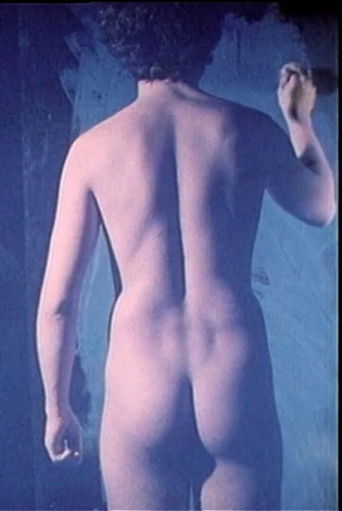
1991 · ★ 0.0 (0)
In 1920 Frans Masereel published in Paris his woodcut series "The idea". Dore O. has draw inspiration from this work on her first feature film, a poetic fable about the human longing for a free and just society. Following Masereel "idea" Dore O's "CANDIDA" accesses old, anchored in the ancient Christian tradition and ideas, according to which such ideas and aspirations in the image of the naked woman find their embodiment.
JustWatch
·
Local
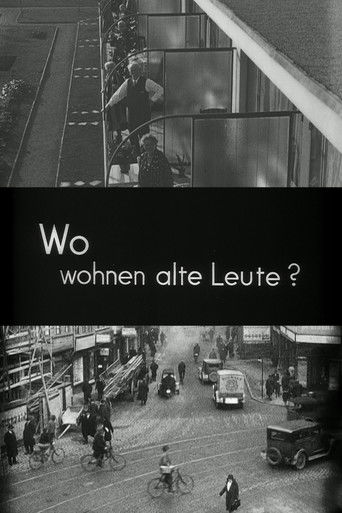
1932 · ★ 0.0 (0)
The 1931 documentary "Wo wohnen alte Leute" for the Dutch architect Mart Stam exhibits the modern and forward-looking architecture of the Budge home in Frankfurt. Its residents live in a comfortable in light-flooded environment with state-of-the-art single rooms. The film focuses on the presentation of an architecture that with its spatial structure supports the sociability of its residents.
JustWatch
·
Local
No poster
2016 · ★ 0.0 (0)
Desperate attempts by Wunderbaum’s actors to change the world radically. Not words but deeds! So they set off into the suburbs, do some urban gardening and start a crying cafe as the conclusion of their socially-committed project.
JustWatch
·
Local
No poster
2015 · ★ 0.0 (0)
Set in a small, typical Belarusian village – granny Sima’s only concern is for the future of her alcoholic son, Vanya. Accompanied by her best friend, a white goat called Manya, she starts a war with her neighbor, Glasha, who happens to be the village Vodka maker…
JustWatch
·
Local
No poster
2000 · ★ 0.0 (0)
Conceptually, Stephanie Barber's short film LETTERS, NOTES is simplicity itself: found photographs hold the screen as animated texts transcribe brief notes and letters unmoored from context. And yet the elusive poignancy that emerges of this exquisite corpse structure is richly suggestive of the roots of narrative. If a code is a "reduced version of lang." (as one of the more enigmatic notes reads) then Barber’s film might be said to explore the possibilities of decoding: specifically, how cinema makes it possible to rewrite sounds and images as emotions. LETTERS, NOTES is another remarkable selection from the Cinemad Almanac.
JustWatch
·
Local
No poster
2010 · ★ 0.0 (0)
A present-day science-fiction without dialogue, Siegel’s “Black Moon” traverses multiple film tropes – action, guns, lonely campfires, the end of the world – and, like its band of armed female revolutionaries, resists taking up residence in a fixed genre or narrative.
JustWatch
·
Local
No poster
2015 · ★ 0.0 (0)
Short film composed of material not used in other films.
JustWatch
·
Local
No poster
2015 · ★ 8.0 (1)
This documentary weaves three stories – all set in the blind community of Havana, Cuba – into a tale of personal independence. As Lis, Mily, and Margarita each face family problems and heartbreak, their dependence on others turns out to be a double-edged sword. From the music halls of Havana to a cinema club for the blind, their stories reveal both the pain and the joys of fighting for yourself.
JustWatch
·
Local
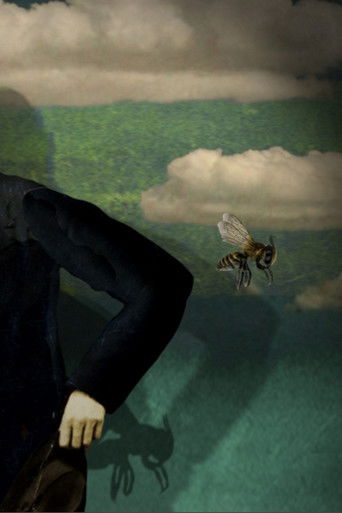
2014 · ★ 0.0 (0)
This animation tells a story about the cicle of life. It is based on found footage and photograps from the director’s family album.
JustWatch
·
Local
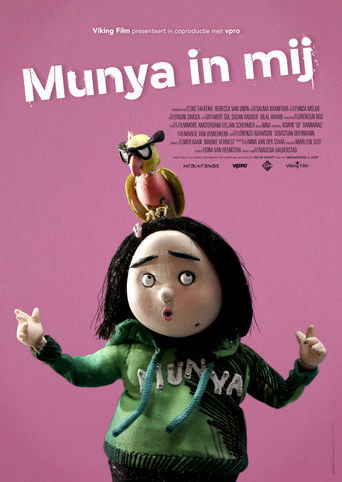
2013 · ★ 0.0 (0)
"Munya in Me" is a stop-motion animation about heavy ten-year-old Munya trying to avoid her bullies on her daily trip to the Turkish supermarket, mostly without success. Until one day she realizes that she shouldn't hide. She should show herself.
JustWatch
·
Local
No poster
2012 · ★ 5.0 (2)
Welcome to the land of RUIN... Where men live in the violence and decay of a once civil land. Young women are isolated from society by their fathers till sold as brides to the highest bidder. Any affairs out of wedlock result in death. Tonight... the wealthiest man of Ruin, The Sultan, will auction his daughter's life. All Luna longs for is to escape with her one true love. Can he get to her before it's too late?
JustWatch
·
Local
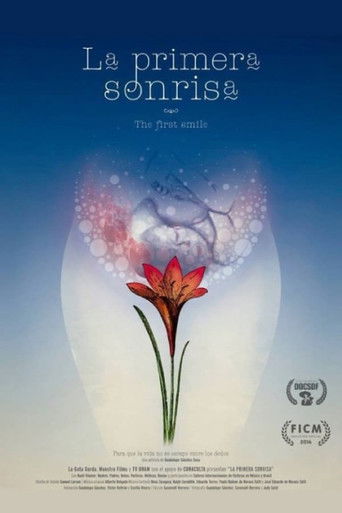
2014 · ★ 5.7 (3)
Midwives from around the world travel to Mexico and Brazil summoned by Naolí, a Mexican midwife, in order to learn further and make of their profession an art; just as mothers and fathers in the process of giving birth, they simultaneously open up their bodies and souls to share with us the feminine nature. The First Smile is an emotive work which recovers ancestral knowledge, that shouldn’t have been forgotten.
JustWatch
·
Local
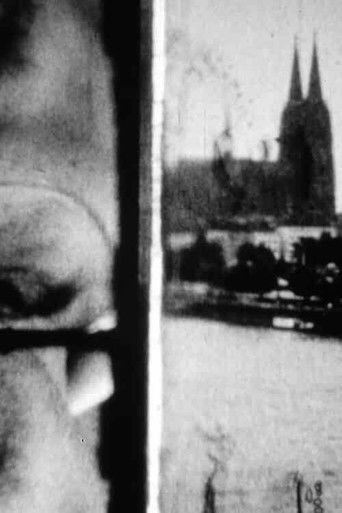
1968 · ★ 5.9 (7)
One of the most important structural films of the period, Rohfilm demonstrates a radical anti-representational approach, destroying the figurative image and bringing attention back to the ‘raw’ photographic material, particularly its physical form. Resisting a stable reference point, the film is a multi-layered onslaught of blurred impressions, shifting surfaces and grating sounds that activates a form of sensuous viewing. In the making of the film, the Heins employed just about every technique of defamiliarization, including direct intervention on the surface of the film strip, rephotography, remediation, and different kinds of mechanical interruption and destruction. It is a striking example of a truly handmade approach. (Kim Knowles)
JustWatch
·
Local
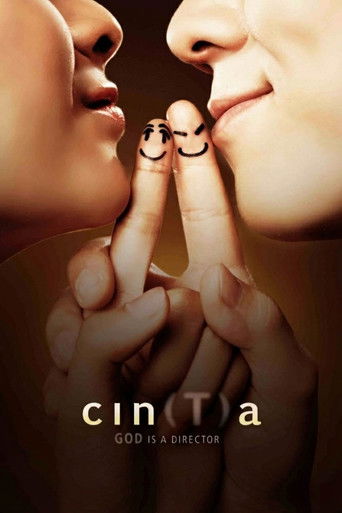
2009 · ★ 8.0 (2)
Cina and Annisa love God and God loves them both. But Cina and Annisa cannot love each other because they call God by different names.
JustWatch
·
Local
2014 · ★ 7.7 (6)
JustWatch
·
Local
1992 · ★ 6.5 (2)
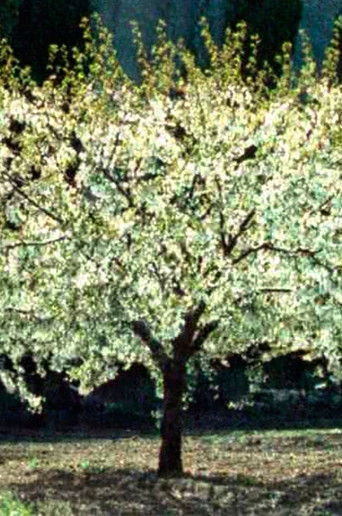
Quiproquo is a dialogue on the balance to be found between nature and social-industrial technology. As the film refers to the economy of the means involved in relation to what is expressed, it is both a reflection on the potentialities of the medium and an enquiry concerning the implications of the reality portrayed. It is a question of limits and possibilities, the beauty and tragedy of the world, with a critique of contemporary society’s dominant choices constantly in the background. Filmed in Berre l’Etang, Bouches du Rhône, in the villages of Orgon, Bouches du Rhône and La Coucourde, Drôme, on the roads to Beaumont-du-Ventoux and Carpentras, Vaucluse, and Tarascon, Bouches du Rhône.—Canyon Cinema
JustWatch
·
Local